
THC potency is the amount of THC, the compound that causes the high, in a product. On flower it appears as a percentage of weight, and on edibles as milligrams per piece. A bigger number means a stronger product, but it does not mean a better one. The right level depends on the product type, your experience and how you plan to use it. At Burnaby Buds we sell flower, edibles, concentrates, vape pens, CBD and topicals, and we help buyers across Canada match the number on the label to what they actually want.
TL;DR
- Potency is shown as a percentage of THC by weight for flower, and as milligrams per unit for edibles. Compare like with like.
- Dried flower in Canada runs up to about 30% THC, extracts up to 90% and more, and a single edible unit is capped at 10 mg.
- The same strain can vary from batch to batch, so read the label of the exact package you buy.
- Beginners should start low: 2.5 mg THC or less for edibles, and 1 to 2 puffs of a product at 10% THC or less.
- Higher THC is not a quality score. CBD, terpenes and your own tolerance shape the experience too.
Table of Contents
- What THC potency actually means
- How strong is strong? A flower scale
- THC levels by product type
- Why the same strain can test differently
- How to read a Canadian THC label
- Choosing a level that fits you
- Perspective
- Find your level with Burnaby Buds
- FAQ
- Sources
What THC potency actually means
THC (tetrahydrocannabinol) is the main psychoactive cannabinoid. Health Canada says potency is usually shown as a percentage of THC by weight, or by volume for oils. A gram of flower at 20% THC holds about 200 mg of THC, because 1% of 1,000 mg is 10 mg.
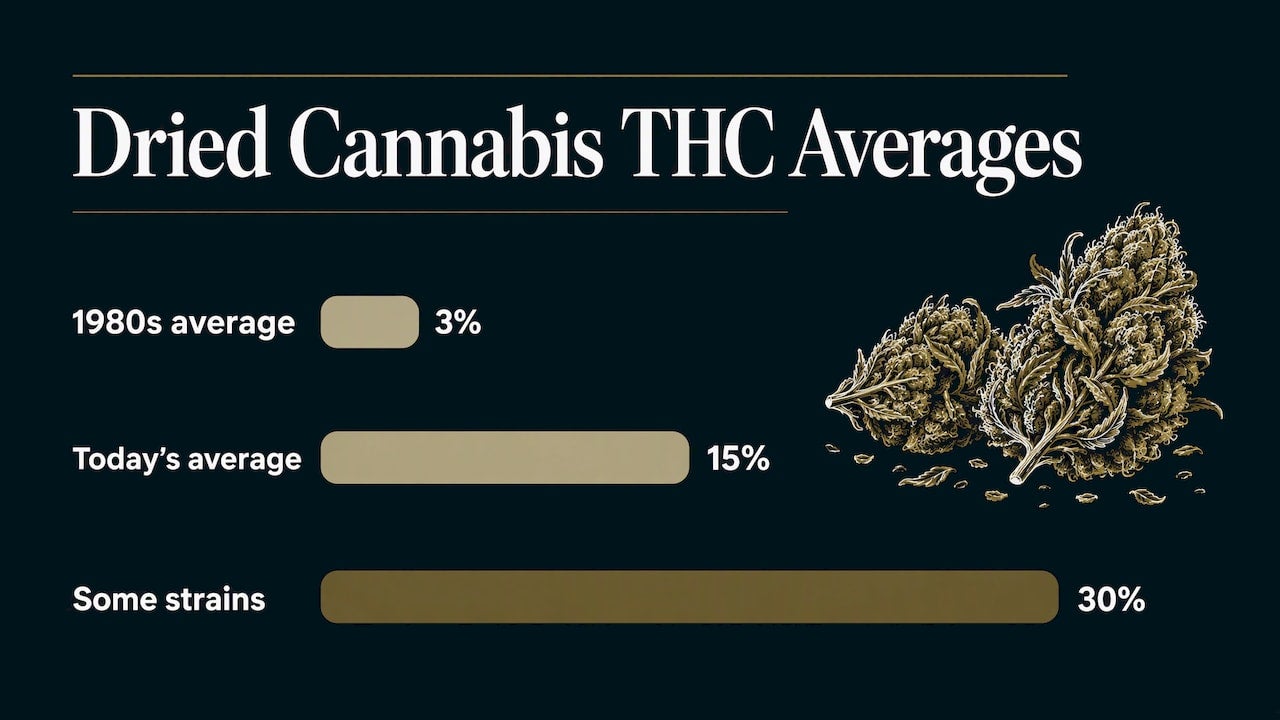
That is why the figure matters. Health Canada also notes that average THC in dried cannabis has climbed from about 3% in the 1980s to around 15% today, with some strains averaging as high as 30%. Products today are much stronger than the ones older friends or relatives may describe.
Potency versus effect
Potency tells you how much THC is present. It does not predict exactly how you will feel. Body weight, tolerance, whether you have eaten, and how you consume it all change the result. CCSA, Canada’s drug-use research agency, notes in its Knowing Your Limits guide that research shows THC and CBD levels are better indicators of effect than strain names.
How strong is strong? A flower scale
Is 20% THC strong? Ottawa Public Health, using a scale from the Ontario Cannabis Store, rates 12 to 16.99% as medium, 17 to 20% as strong and over 20% as very strong. So 20% sits at the top of strong. For someone who uses cannabis a few times a month, it is plenty.
The same page advises beginners to start with one or two puffs of a product at 10% THC or less when smoking or vaping.
| Flower THC | Rough description | Who it tends to suit |
|---|---|---|
| Under 12% | Mild | First-timers, low-tolerance users |
| 12 to 16.99% | Medium | Casual users |
| 17 to 20% | Strong | Regular users |
| Over 20% | Very strong | Experienced, high-tolerance users |
The bands come from the scale above. How you feel at each level is personal.
THC levels by product type
The percentage on a pre-roll and the milligrams on a gummy are different measures. Health Canada’s table lists dried or fresh herbal material up to 30% THC, cannabis oil up to 3%, hash or kief up to 60%, and chemically concentrated extracts up to 90%. Edibles depend on how much extract is added.
| Product | How potency is shown | Typical ceiling |
|---|---|---|
| Flower and pre-rolls | % THC by weight | Around 30% |
| Hash and kief | % THC by weight | Up to 60% |
| Concentrates | % THC by weight | Up to 90% and beyond |
| Edibles | mg THC per piece | 10 mg per unit |
| Oils and tinctures | mg per mL or per bottle | Varies by product |
The edible cap is a legal limit. Health Canada’s composition rules limit discrete ingestible units to 10 mg THC, which accounts for THCA converting to THC. A package of ten gummies at 10 mg each holds 100 mg in total, which is why the per-piece number is the one to read.
Why concentrates are a different category
A concentrate at 80% THC is not a slightly stronger flower. It is roughly three to four times the THC per gram. A dab the size of a grain of rice carries far more THC than a puff of flower. A 2025 systematic review in the American Journal of Psychiatry grouped products into bands from 1 to 9% up to concentrates at 60% and above, and it reported a link between concentrate use and anxiety in a Canada and US survey. If you are new to concentrates, begin with the smallest amount you can measure.
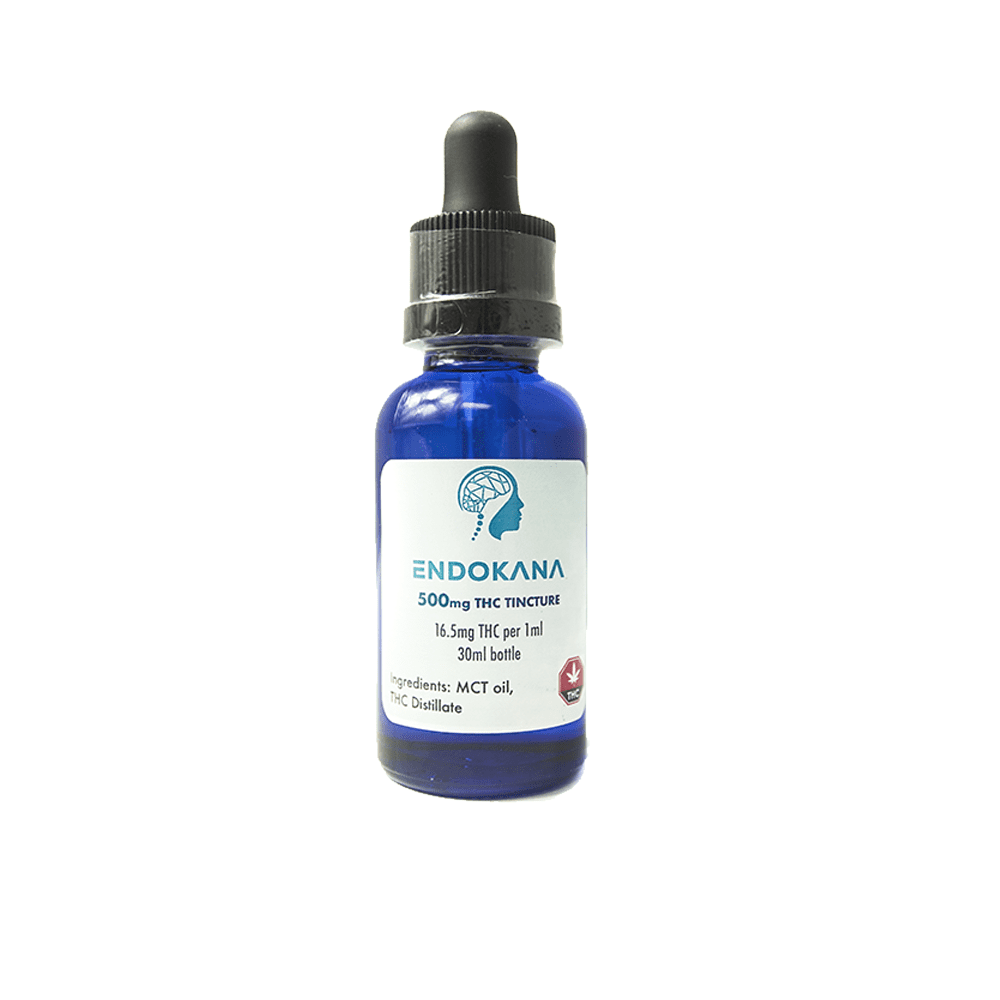
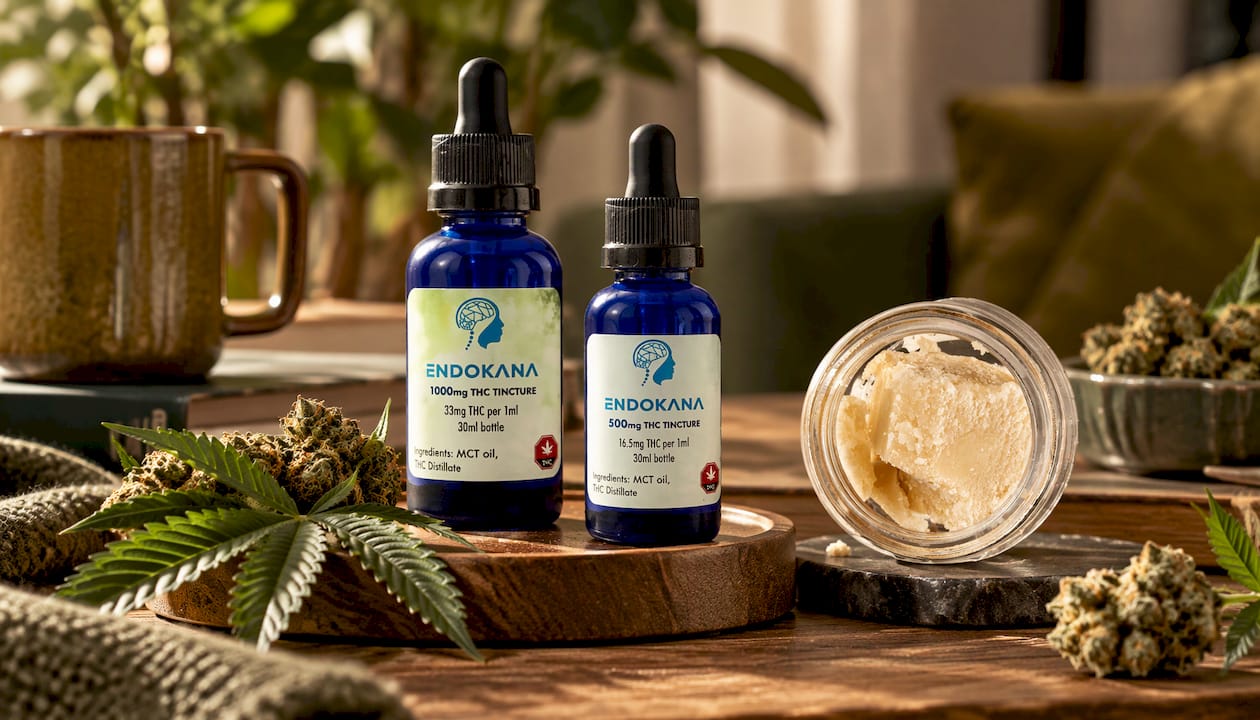
If you prefer a measured dose, our THC tinctures list their milligram totals on the product page, which makes dosing by the drop easier to plan.
Why the same strain can test differently
A strain name is not a potency guarantee. A 2025 Canadian study in Scientific Reports found that total THC varied by 3.1 to 6.7% within a single plant level across nine batches, and by 4.7 to 6.1% between the top and bottom of plants. Light, position on the plant and growing conditions all play a part.
CBC reported on UBC research in which 35% of 81 tested strains had genetics that did not match their advertised type. The lesson is practical: when you reorder a favourite, check the new batch’s figures rather than assuming they match the last one. For more on why names mislead, see our guide to sativa, indica and hybrid and this piece on checking THC and CBD before strain type.
How to read a Canadian THC label
Health Canada says the front of the label must show total THC and total CBD, expressed by weight, per unit, as a total amount, or per activation for sprays. Its example: a 30 g package labelled 180 mg/g total THC holds 5,400 mg of THC in all.
A quick routine:
- Find total THC and total CBD, in bold on the front.
- Check the unit: mg/g, mg per piece, or total mg.
- For multi-piece packages, divide the total by the number of pieces.
- Look at the CBD figure. More CBD alongside THC changes the profile.
- Compare against your starting limit, not against the highest number on the shelf.
Labels changed recently. A March 2025 Canada Gazette amendment requires labels to display only total THC and total CBD, and gave licence holders 12 months to use up old dual-potency labels. That means you may still see older packages with two sets of numbers. Use the total figures. For a walkthrough of lab certificates behind those numbers, this six-step check for potency and safety is a good companion.
Choosing a level that fits you
CCSA’s lower-risk guidance suggests choosing lower-THC products or a higher CBD to THC ratio, using only occasionally, such as once a week, avoiding deep inhalations, not mixing with alcohol or other drugs, and not driving, since effects can last six hours or longer.
First-time users
Start with 2.5 mg THC or less in an edible, or one or two puffs of a 10% product, per Ottawa Public Health. Wait before taking more. Edibles take longer to arrive and last longer than inhaled products. Our edible dosage guide goes piece by piece, and the guide to low THC strains covers mild flower.
Casual users on a budget
A moderate percentage usually does the job. A 15 to 18% flower used in small amounts goes a long way, and you do not need to pay a premium for the highest number. Our guide to choosing a THC percentage walks through the trade-offs.
Experienced users
Higher tolerance means higher numbers feel manageable, but the same variation in batches applies. Compare terpene and CBD information as well as THC, and see our explanation of the difference between THC and CBD. The researchers behind the Canadian lower-risk guidelines say high THC content is a risk factor for harms such as dependence and mental health problems, and recommend that users know their products’ composition. Anyone with a personal or family history of psychosis or other mental health conditions should talk to a doctor before using cannabis.
Perspective
Most of the questions we get are some version of “what number should I buy?” Our honest answer is that the label percentage is the start of the decision, not the end of it.
We built our shop around helping people read the label: total THC, total CBD, the unit, and the product type. A first-time buyer and a daily user need different things, and both should be able to find them without guessing.
That is why we pair our product pages with guides on dosage, THC percentages and mild options, and why our support team is there to talk through a choice before you order. Better information leads to a better first experience, and a better second order.
the author
Find your level with Burnaby Buds
Whether you want a mild flower, a measured edible or a tincture you can dose by the drop, our range covers it. Browse flower, edibles, concentrates, vape pens, CBD and topicals, with same-day delivery and support when you want a second opinion.
See the full range on our product categories page, or start with our cannabis buying guide.
FAQ
Is 20% THC strong?
Yes. On the Ontario Cannabis Store scale used by Ottawa Public Health, 17 to 20% is strong and anything above is very strong. Beginners are advised to start at 10% or less and take only one or two puffs.
Is 100 mg of THC a lot in an edible?
It is far above a beginner dose. Health Canada’s guidance caps one unit at 10 mg, and public health advice for new users is 2.5 mg or less. A 100 mg package is meant to be divided across many portions, so read the per-piece amount.
Does higher THC mean better quality?
No. The percentage shows concentration only. The Cannabis Act expert panel, as summarised by Legal 500, linked the high-potency trend partly to limited product information that makes buyers think high THC is the only sign of quality.
What is a standard THC unit?
CCSA’s 2026 report proposes a standard unit of 2.5 mg THC across all products, matching the start-low advice for edibles. It is a proposal for a common reference point, not a label rule today.
Sources
- About cannabis, Health Canada
- Lower Risk Cannabis Use, Ottawa Public Health
- Guide on composition requirements for cannabis products, Health Canada
- High-Potency Cannabis Use and Health: A Systematic Review
- Knowing Your Limits with Cannabis, CCSA
- Variability of total THC in greenhouse cultivated dried cannabis
- What’s in your weed, CBC News
- How to read and understand a cannabis product label, Health Canada
- Canada Gazette, Part 2, Volume 159, Number 6
- Lower-Risk Cannabis Use Guidelines: A Comprehensive Update
- Where Is Canadian Cannabis Headed Next?, Legal 500
- Parameters for a Standard THC Unit in Canada, CCSA
- How to read a COA
- Check THC and CBD first: sativa vs indica in Canada