
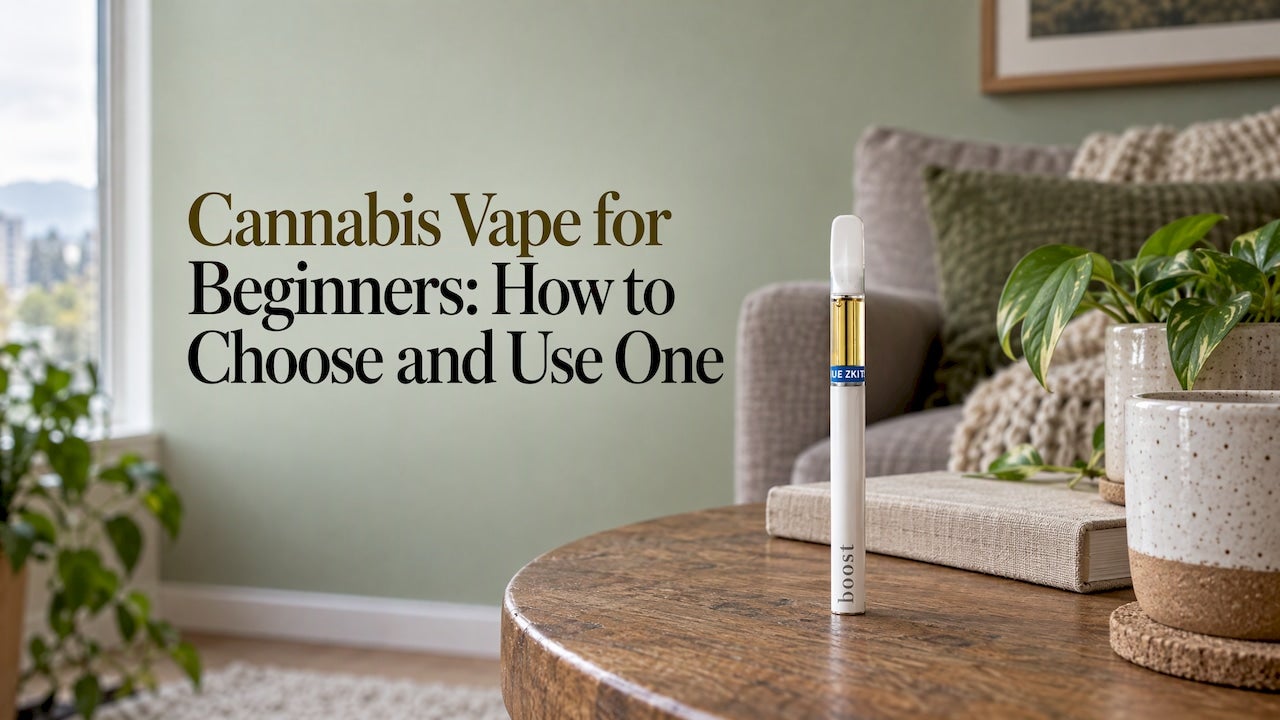
A cannabis vape heats cannabis oil or flower until it makes vapor instead of smoke, and for a first-timer the easiest place to start is a simple pen or cartridge with a modest THC level, one or two small puffs, and a long wait before anything more. Vapes are also among the strongest products on the shelf, so the way you start matters more than the brand you pick. This guide covers what you will meet in the store, how to choose, how to use a vape step by step and which precautions to take. At Burnaby Buds we carry cannabis vape pens and refills and deliver across Canada, and we write our guides so a first order is an informed one.
TL;DR
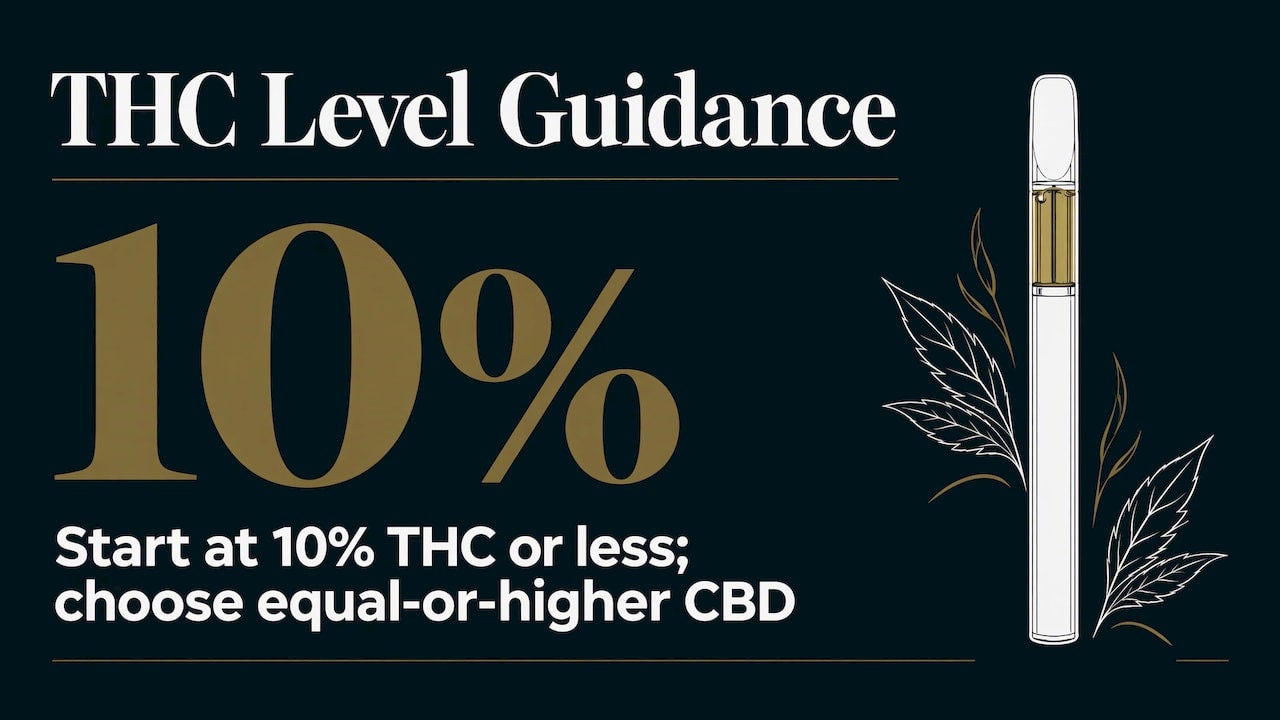
- Health Canada’s guidance for lower-risk vaping is to start with 1 or 2 puffs of a product with 10% (100 mg/g) THC or less, ideally with equal or more CBD.
- Wait up to 30 minutes before deciding whether you need more. Vape effects arrive fast, but the full effect can take that long.
- Disposable pens are the simplest first device. Rechargeable batteries with 510-thread cartridges suit people who want to refill later.
- Take small, slow puffs, do not hold your breath, and never drive for at least 6 hours after use.
- Follow the device’s instructions, charge it properly and do not share it.
Table of Contents
- What a cannabis vape actually is
- The main types of vape a beginner will see
- How to choose your first vape
- How to use a cannabis vape, step by step
- How long to wait before you take more
- Safety points every beginner should know
- Our perspective
- Ready to pick your first vape
- FAQ
- Sources
What a cannabis vape actually is
A vape is a battery, a mouthpiece, a heating element and a chamber or cartridge holding the product. Health Canada lists vape pens, e-liquid pods and vaporizers among the common examples. When you press the button or draw on the mouthpiece, the element heats the contents. CAMH explains that vapes heat cannabis oil or flower to produce vapor rather than smoke, which is why many people find them less harsh than a joint.
Three things are worth knowing before you shop:
- The product inside matters as much as the device. A 2023 review in Drug and Alcohol Review describes three main product types: dried flower, e-liquids (oils) and solid concentrates.
- Potency varies a lot. The same review reports that e-liquids commonly contain 40 to 95% THC, solid concentrates tend to exceed 90%, and dried flower is usually below 30%.
- Vapes are common. Statistics Canada’s National Cannabis Survey found that vape pens and cartridges were more commonly used by younger consumers than by older ones, so plenty of first-timers are starting with them.
That potency gap is the single most useful fact in this guide. Because most cannabis side effects depend on the THC dose, according to the same review, a concentrated oil needs far smaller puffs than a flower joint would.
The main types of vape a beginner will see
You do not need to learn every device name. In practice, a beginner will choose between three setups.
Disposable pens
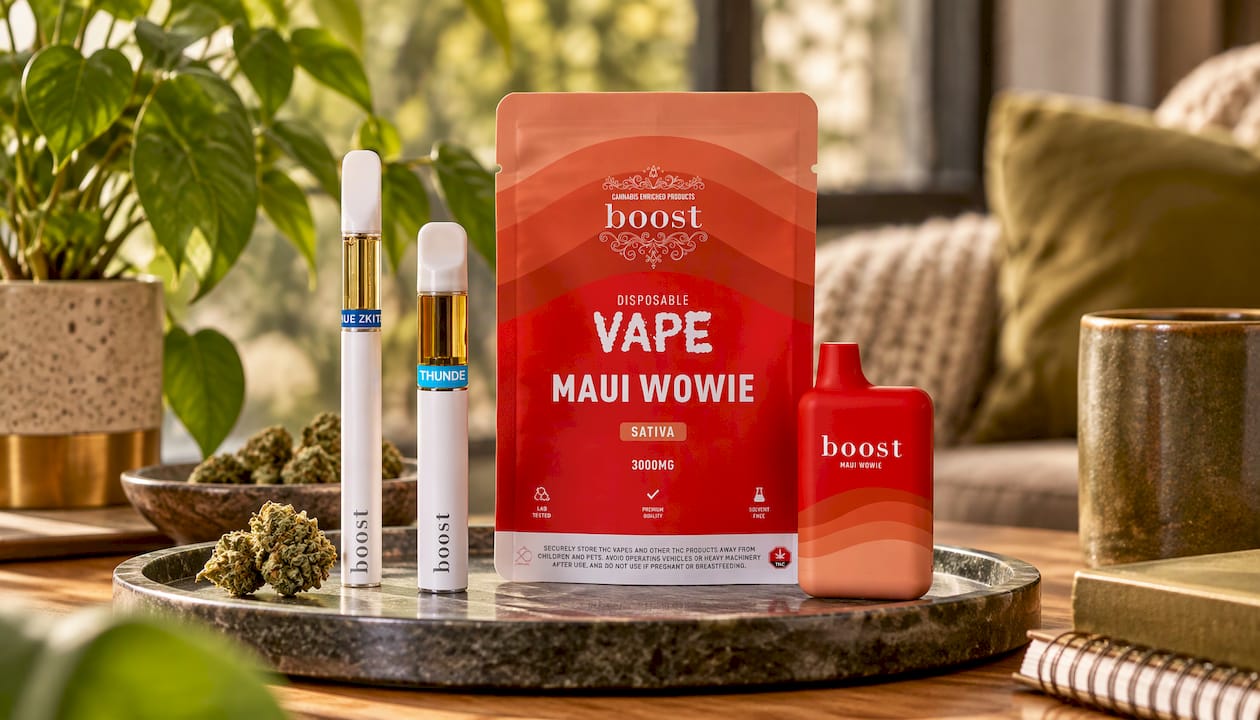
A disposable is an all-in-one pen: battery and oil are sealed together, there is nothing to charge or screw together, and you throw it away when it is empty. This is the lowest-effort way to start. Our Boost disposable vapes come in 1g, 2g and 3g sizes. If you are unsure how often you will use it, the smaller size is a sensible way in.
Rechargeable battery plus 510-thread cartridge
The 510 thread is the common screw fitting that lets one battery work with many cartridges. You buy a battery once, charge it, and swap in cartridges. This suits people who expect to try several flavours or strains, or who prefer a battery with adjustable settings. The trade-off is a few more steps to learn, covered below.
Dry herb and concentrate vaporizers
These heat flower or wax instead of oil. They are a bigger step in both price and technique, and concentrates sit at the high end of potency. Most first-timers are better served by a pen or cartridge and can move on once they know how they respond.
How to choose your first vape
Start with the THC level
Health Canada’s lower-risk guidance is to begin with a vape or joint containing 10% (100 mg/g) THC or less and to choose products with low THC and equal or higher CBD. Alberta Health Services gives the same 10% figure. Because many oils sit far above that, check the label’s THC figure before you add anything to your cart. Our guide to choosing a THC percentage that fits you walks through how to read it, and our page on low THC strains helps if you want something mild.
Consider THC and CBD together
THC is the compound that produces the high. CBD does not, and products with a balanced ratio are a popular beginner choice. If you are not sure how the two differ, read the difference between THC and CBD. If you are looking at CBD-only vaping, our CBD dosage guide covers how much to take.
Pick a format you will actually use correctly
If reading a manual sounds like a chore, take a disposable. If you like tinkering, a battery and cartridge gives you more control. For a wider look at labels, terpenes and product types, see our cannabis buying guide.
Check the label and the packaging
Look for the THC and CBD figures, the product type (distillate oil, for instance) and the device compatibility. A cartridge must match the battery thread. If your order is a cartridge for a battery you already own, confirm it is 510 thread before you buy.
How to use a cannabis vape, step by step
The steps below follow UBC’s beginner guide to vape cartridges, combined with Health Canada’s dosing advice. Always read the instructions that come with your specific device first, because models differ.
- Prepare the device. Charge a reusable 510 battery, or take your disposable out of its packaging. Do not leave a battery charging unattended or overcharge it, as Health Canada advises against overcharging.
- Attach the cartridge. With a reusable battery, screw the cartridge on gently until it is snug. Forcing it can damage the thread or cause leaks.
- Turn it on. On many batteries you click the button five times to switch it on. Check your model, since not all work this way.
- Choose a low setting. If your battery has temperature or voltage settings, start low. UBC advises a low temperature and small, gentle puffs.
- Take one slow puff. Hold the button if your device needs it and inhale slowly for about five seconds. Do not inhale deeply or hold your breath, which Alberta Health Services also advises against. Exhale normally.
- Wait. UBC suggests at least five minutes between puffs. For your first session, wait much longer, as explained next.
- Switch off and store. Turn the battery off, keep the device upright and out of reach of children and pets.
A common mistake is pulling on the pen like a cigarette. A big, fast, deep draw with a high-THC oil delivers a lot in one go. Think of a sip, not a gulp.
How long to wait before you take more
Vape effects feel quick, which tempts beginners to keep going. Health Canada’s lower-risk page says effects are felt in seconds to minutes, and it can take up to 30 minutes to feel the full effect. Its medical-use guidance gives a similar picture: effects may be strongest after 10 to 30 minutes and can last 2 to 4 hours, and it suggests starting with 1 to 2 inhalations and stopping when side effects appear. Alberta Health Services notes that effects can last 6 hours or more, and for some people up to 24 hours.
A practical first-session plan:
- Take 1 or 2 small puffs.
- Set a timer for 30 minutes and do something calm.
- If you feel fine and want more, take one more small puff, then wait again.
- Stop at the first sign of dizziness, a racing heart, anxiety or nausea, and drink water and rest.
Plan the session for a time when you have nowhere to be, ideally at home.
Safety points every beginner should know
Impairment and driving
Health Canada’s lower-risk guidelines say that cannabis-impaired drivers face a two to three times higher collision risk, and they advise waiting at least 6 hours after use before driving or operating machinery. They also advise not combining cannabis with alcohol.
Age, pregnancy and mental health
Health Canada’s health warning messages, in effect since March 12, 2025, say that using cannabis before age 25 can harm brain development and raise the risk of psychosis, that higher-THC products carry greater risk of adverse effects, and that cannabis should not be used when pregnant or breastfeeding. Health Canada also notes that higher-THC products increase the risk of symptoms such as severe paranoia and anxiety. If you have a personal or family history of psychosis or other mental health conditions, or you take prescription medication, speak to your doctor or pharmacist before you use any cannabis product.
Cannabis is for adults of legal age only. The minimum age differs by province and territory, and Health Canada lists each one.
Keep use occasional
The lower-risk guidelines recommend occasional use, such as one day a week or less, because daily or near-daily use is among the strongest predictors of serious health problems.
Device care
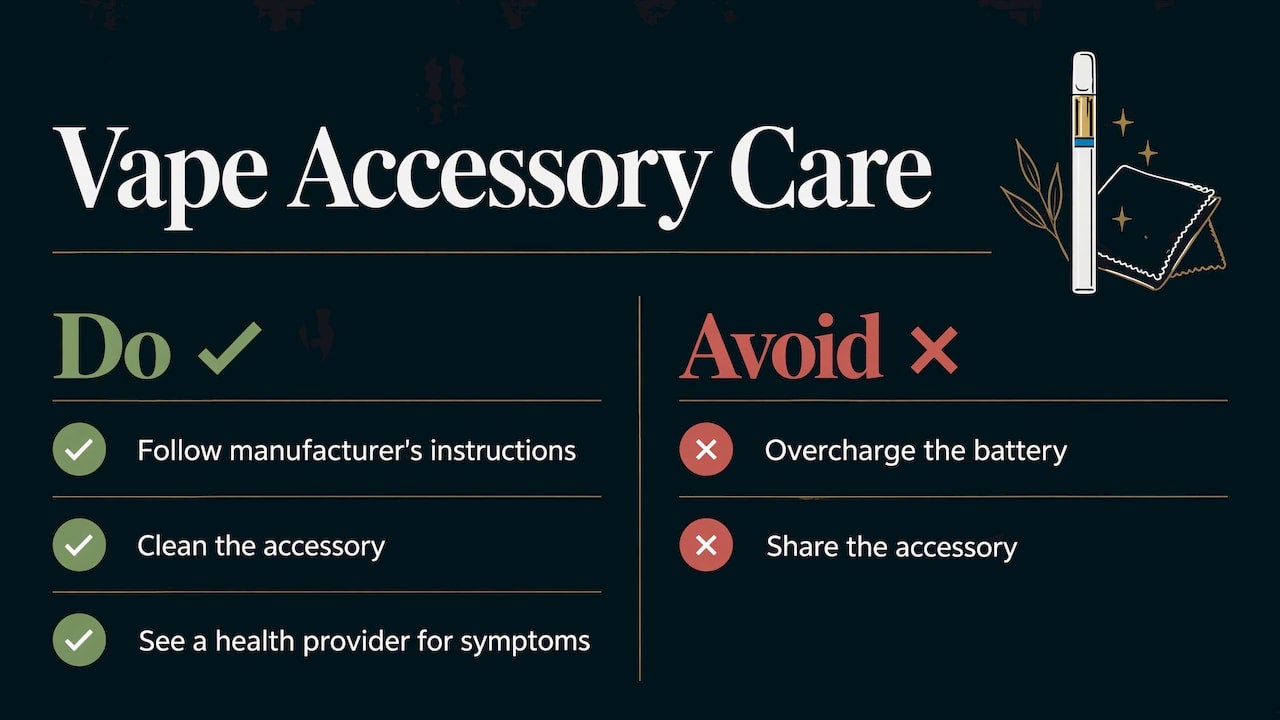
Health Canada says accessories can malfunction and, in rare cases, cause injury. Its precautions: follow the manufacturer’s instructions, clean the accessory, avoid overcharging the battery and do not share it. It adds that vaping is less harmful to the lungs than smoking, though the aerosol still contains harmful substances. The Government of Nova Scotia advises anyone with a cough, shortness of breath or chest pain after vaping to see a health provider and mention their vaping.
If the cartridge stops working
A weak draw or no vapor is usually a clogged cartridge or a loose connection, not a reason to force it. Our guide explains what to do when a vape cartridge is clogged safely.
Our perspective
Most beginners who write to us are not asking which vape is the strongest. They want to know which one will not overwhelm them. Our answer is always the same: start simple, start small and be patient.
A pen is a good introduction because it takes the guesswork out of the hardware. You can focus on the one thing that matters, how much you inhale and how long you wait. That is why we built our shop and our guides around education as much as selection: the labels, the THC and CBD figures and the dosing advice are all things we explain, so you can choose with confidence.
We also think a beginner should be able to shop without pressure. Our customer support is personal, our range of pens, refills and CBD options lets you begin gently, and our same-day delivery means you can plan a calm first session at home instead of rushing.
the author
Ready to pick your first vape
If you are in Burnaby, Vancouver, Surrey, Coquitlam, Port Coquitlam or elsewhere in Canada and want a simple start, browse our vape pens and refills. The Boost disposables are a straightforward entry point, and our support team can answer questions about THC levels before you order. Delivery is same-day.
If you want to see the whole range first, the full product categories cover flower, edibles, concentrates, CBD, topicals and accessories.
FAQ
Which vape is best for beginners?
A disposable pen or a small rechargeable battery with a cartridge is easiest to learn. Choose the lowest THC level you can find, with CBD if possible. Health Canada’s starting guidance is 10% (100 mg/g) THC or less, with 1 or 2 puffs.
How many puffs should I take the first time?
One or two small, slow puffs, then wait up to 30 minutes before deciding on more. Health Canada says it can take that long to feel the full effect, so extra puffs taken too early are the usual cause of an unpleasant first experience.
What does a CBD vape feel like?
CBD does not cause the high that THC does. People commonly describe the experience as subtle, and effects vary between individuals and products. Start small and follow the label. Our CBD dosage guide goes into detail.
Is vaping safer than smoking cannabis?
Health Canada says vaping is less harmful to the lungs than smoking, but the aerosol still contains harmful substances and long-term effects are unknown. Use occasionally, follow the device instructions and stop if you develop a cough, chest pain or shortness of breath.
How long do the effects last?
Health Canada’s medical-use guidance says vaping effects may last 2 to 4 hours, while Alberta Health Services says they can last 6 hours or more and, for some people, up to 24 hours. Do not drive for at least 6 hours after use.
Sources
- Cannabis accessories for inhalation: Minimizing your risk, Health Canada
- Cannabis vaporisation: Understanding products, devices and risks, Drug and Alcohol Review
- Do You Know… Cannabis, CAMH
- National Cannabis Survey, 2023, Statistics Canada
- Cannabis: lower your risks, Health Canada
- Cannabis, Alberta Health Services
- How to Use Cannabis Vape Cartridges: A Beginner’s Guide, UBC
- Cannabis for medical purposes: Using a cannabis product, Health Canada
- Canada’s lower-risk cannabis use guidelines, Health Canada
- Cannabis health warning messages, Health Canada
- Understanding cannabis health effects: How to reduce your risk, Health Canada
- Authorized cannabis retailers in the provinces and territories, Health Canada
- Extracts & Topicals Cannabis, Government of Nova Scotia